

Cash App’s ‘Support Line’ Was Run by the Scammers Who Robbed You
On July 8, 2026, Block Inc. agreed to pay $45 million to settle allegations from 46 state attorneys general that it misled millions of Cash App users about the platform’s…
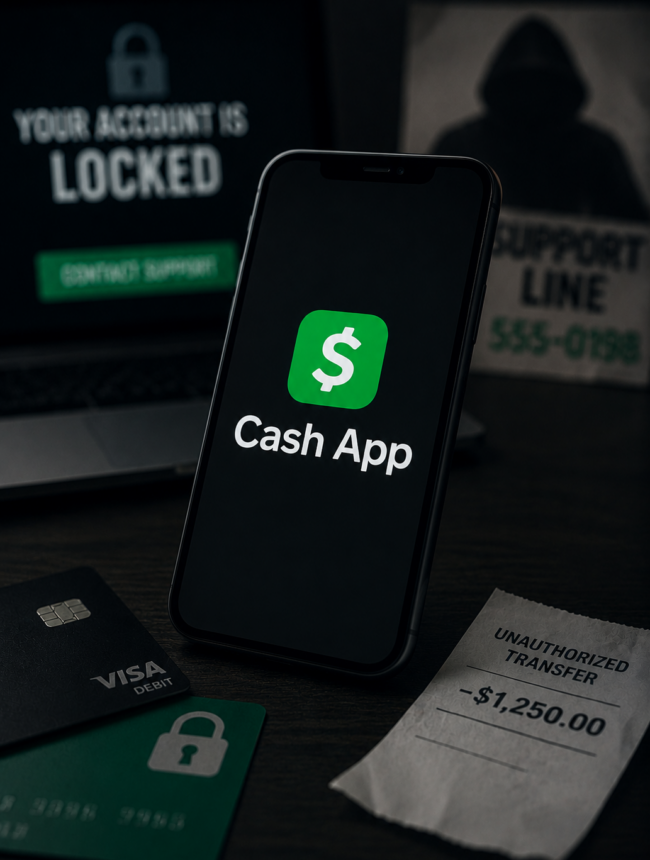
On July 8, 2026, Block Inc. agreed to pay $45 million to settle allegations from 46 state attorneys general that it misled millions of Cash App users about the platform’s safety while systematically failing to investigate fraud complaints. The settlement is pending final approval. A separate CFPB settlement reached in January 2025 required Block to pay users between $75 million and $120 million for the same core failures.
If you lost money to fraud on Cash App and got nowhere with the company’s support — or couldn’t find support at all — you are exactly who this settlement is about.
The Scam That Wasn’t an Accident
Block marketed Cash App as a safe, bank-like platform for sending money, direct-depositing paychecks, and receiving government benefits. According to the multistate settlement announced by attorneys general in New York, Connecticut, and Pennsylvania, the company made those claims while fraud on the platform was rising sharply and its fraud response infrastructure was nowhere close to adequate.
The gap between the marketing and the reality wasn’t subtle. For years, Cash App had no phone support at all. Users who got locked out of their accounts or lost money to scammers would search online for a customer service number — and find fake ones operated by the very scammers who had already taken their money. The attorneys general allege that Block knew fraud was escalating and kept running acquisition marketing anyway.
There’s a clean financial logic to that choice. Processing transactions generates revenue. Investigating fraud claims costs money, takes staff, and slows growth. The settlement allegations describe a company that made the math work by under-resourcing the expensive part.
3 Ways Cash App Made Fraud Easier (Not Harder)
The investigators’ findings weren’t just about inadequate response after the fact. The settlement allegations describe specific design and marketing choices that made Cash App a better environment for scammers:
- Minimal identity checks at signup — Cash App’s fast onboarding process made it easy for scammers to create accounts, according to the attorneys general. The low barrier that made the app attractive to new users made it equally attractive to bad actors.
- No phone support for years — The absence of live customer service didn’t just frustrate victims. It actively created a secondary scam opportunity: fake support numbers that appeared in search results when users looked for help.
- Cash App Fridays — Block ran a promotion encouraging users to publicly post their $cashtag for a chance to win a weekly prize. Investigators say scammers used those public posts to contact users, claim they had won, and trick them into handing over login credentials.
Each of these was a known risk. The settlement’s required reforms — 24-hour customer support, live phone access for at least 13.5 hours daily, and live chat for at least 18 hours daily — are detailed in the Connecticut Attorney General’s announcement of the settlement and amount to an admission that the prior setup wasn’t close to adequate.
This Is the Second Time in Under 2 Years
This $45 million multistate settlement is not an isolated regulatory action. In January 2025, the Consumer Financial Protection Bureau reached a separate settlement requiring Block to pay Cash App users between $75 million and $120 million for the same core failure: inadequate fraud investigation and customer protection. That settlement covered direct reimbursement to harmed users.
Two major regulatory actions. The same underlying conduct. The CFPB moved first; 46 state attorneys general followed.
New York Attorney General Letitia James put it plainly in her office’s announcement:
“For years, Cash App users lost money to costly scams because Block cared more about profits than protecting its users.”
Block has not admitted wrongdoing as part of the multistate settlement. The CFPB enforcement action is documented on the bureau’s enforcement page at consumerfinance.gov/enforcement.
Who Got Hit Hardest
The settlement allegations specifically call out Block’s promotion of Cash App to consumers with limited or no access to traditional banking — people who used it for direct deposit of paychecks and government benefits. This population had the least margin for error and the fewest alternatives when something went wrong.
Connecticut Attorney General William Tong described the platform as “riddled with fraud” while the company “did next to nothing to protect its customers from the devastating financial consequences.” Massachusetts Attorney General Andrea Joy Campbell noted that companies advertising safety and security “have an obligation to deliver on those promises.”
The state-by-state breakdown of the $45 million, as detailed in the Pennsylvania Attorney General’s announcement of the settlement:
- New York — $1.6 million
- Connecticut — $1.5 million
- Pennsylvania — more than $1.13 million
- Massachusetts — $730,000
- Maine — more than $330,000
- Remaining 41 states — proportional shares of the balance
What You Can Do Right Now
The $45 million multistate settlement is pending final approval as of July 2026. The separate CFPB settlement from January 2025 — which covers direct user reimbursement of $75-120 million — is the more immediate source of potential recovery for individual users.
- Check your eligibility for the CFPB settlement. The CFPB’s Cash App enforcement action covers users who experienced unauthorized transactions or inadequate fraud response. Monitor the CFPB’s enforcement page at consumerfinance.gov/enforcement for claim filing instructions and deadlines. This settlement has a direct user reimbursement component — it’s the one most likely to put money back in your pocket.
- Contact your state attorney general’s office. All 46 participating states have AG offices that can direct you to settlement claim information as it becomes available. Find your state AG at naag.org. If you’re in New York, Connecticut, or Pennsylvania, your AG’s office was directly involved in the announcement and is a primary contact point.
- File a complaint with the CFPB. Even if you missed earlier claim windows, filing at consumerfinance.gov/complaint creates a documented record of your loss. The CFPB uses complaint volume to prioritize enforcement — your complaint contributes to the record on Block.
- File with the FTC. Report fraud at reportfraud.ftc.gov. The FTC tracks peer-to-peer payment fraud patterns and your report adds to the data that drives future enforcement.
- Document everything now. Screenshot your transaction history, any fraud reports you filed with Cash App, and any responses — or non-responses — you received. This documentation is what makes a claim viable. If you no longer have access to your account, contact Cash App support and request your transaction records. The settlement now requires them to actually respond.
- Watch for the settlement administrator’s site. When the multistate settlement receives final court approval, a claims portal will open. Check the New York AG’s press release page and your state AG’s site for updates.
The filing deadline for the multistate settlement has not yet been set — final approval is still pending. Do not wait to document your losses and file your CFPB complaint. Those steps cost nothing and preserve your options.
 Written by: Companies Behaving Badly
The team behind it all.
Been harmed by corporate negligence? Our legal partners can help you understand your rights and pursue justice.