
Bayer Lobbied for a Label With No Cancer Warning. It Just Paid Off.
On June 25, 2026, the U.S. Supreme Court ruled 7-2 to throw out thousands of state lawsuits accusing Bayer of failing to warn Roundup users that glyphosate causes cancer. The…
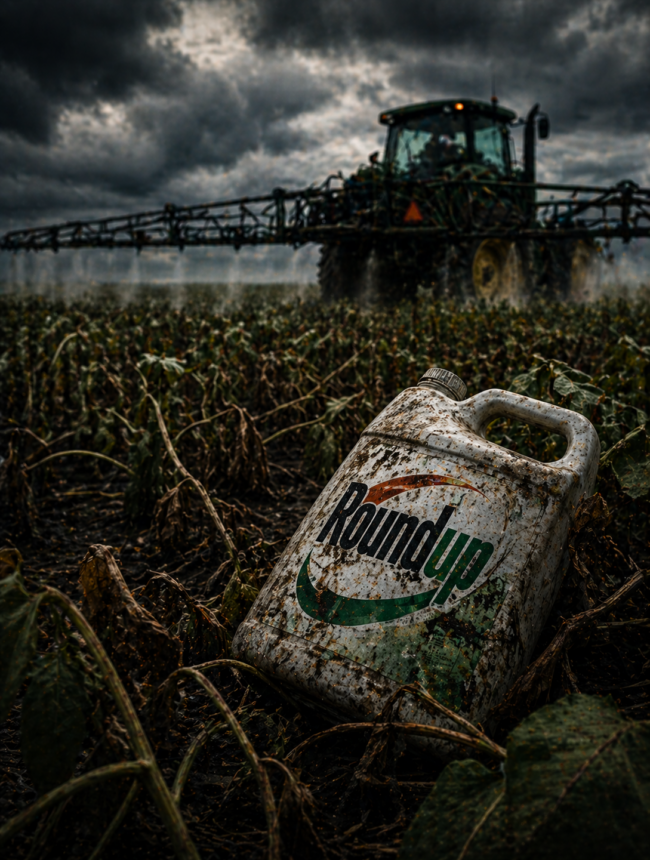
On June 25, 2026, the U.S. Supreme Court ruled 7-2 to throw out thousands of state lawsuits accusing Bayer of failing to warn Roundup users that glyphosate causes cancer. The ruling overturned a $1.25 million jury verdict for John Durnell, a Missouri man diagnosed with non-Hodgkin’s lymphoma after two decades of spraying Roundup at local parks without protective equipment.
More than 100,000 plaintiffs had cases pending — and the ruling puts most of them in serious jeopardy.
John Durnell sprayed Roundup at St. Louis parks for roughly 20 years starting in 1996. No protective gear. No warning label. No reason to think the product was dangerous. A jury believed him in 2023. An appeals court agreed in 2025. The Supreme Court said it didn’t matter.
If you used Roundup for years and now have cancer, the ruling narrows your options significantly — but it does not eliminate them entirely. What it guts is the most common legal theory: that Bayer failed to warn you of the cancer risk.
What the Supreme Court Roundup Warning Label Decision Means for You
The majority opinion, written by Justice Brett Kavanaugh, held that a federal pesticide law called FIFRA, the Federal Insecticide, Fungicide and Rodenticide Act, preempts state-law failure-to-warn claims. The logic: The EPA approved Roundup’s label without a cancer warning, so states cannot hold Bayer or its predecessor, Monsanto, liable for not including one. Federal approval, in the Court’s view, immunizes the label.
Justice Ketanji Brown Jackson, dissenting alongside Justice Neil Gorsuch, called the ruling “remarkable and regrettable” for “unjustifiably closing the courthouse doors to state tort plaintiffs.”
Here’s what that means in plain terms: If federal approval shields a company from state liability, the incentive runs entirely toward lobbying for a weak federal label rather than warning consumers of risk. Bayer spent years arguing exactly this position. On June 25, it worked.
The practical result: A company can argue it had no duty to warn you, as long as it got the federal government to agree the label was fine.
This is not a new play. Bayer acquired Monsanto for $63 billion in 2018 — a purchase that came with the herbicide, the market dominance, and the litigation. According to Insurance Journal’s reporting on the case, the company had already paid out billions in prior settlements before this ruling.
In February, Bayer announced a proposed $7.25 billion settlement to resolve tens of thousands of current and future claims. Then, as Insurance Journal reported in June, a federal judge sent that settlement back to state court — and it is not yet finalized.
So to recap: Bayer proposed a $7.25 billion deal that isn’t done yet, and just convinced the Supreme Court that it had no legal obligation to warn anyone in the first place. Quite a position to hold simultaneously.
Who Was in Bayer’s Corner
The Trump administration backed Bayer in this case, according to Insurance Journal. Several agricultural industry groups did as well.
Notably, some Make America Healthy Again activists — aligned with Health Secretary Robert F. Kennedy Jr. — publicly criticized that support, given the movement’s stated concerns about glyphosate. That particular tension didn’t make it into the majority opinion.
Environmental and public health advocates were direct in their response. “Once again, the Supreme Court has sided with big business over people and the environment. Today’s ruling is a disaster for public health,” said Tarah Heinzen, legal director at Food and Water Watch.
What You Can Still Do
The ruling kills failure-to-warn claims under state law. It does not necessarily kill every theory of liability. Here’s where things stand:
- If you’re part of the existing $7.25 billion settlement: That deal is still being negotiated and is not yet court-approved. Contact the settlement administrator or your attorney to confirm your status before assuming you’re covered.
- If you have a pending lawsuit: Call your attorney immediately. Some claims, particularly those not based on failure-to-warn or those in pending appeals, may survive. Bayer’s own pre-ruling statements indicated the ruling would not affect claims in pending appeals or those outside the settlement.
- If you haven’t filed and need an attorney: Start with a free case review. Then gather purchase records, medical records, and any employment or volunteer records showing Roundup use alongside your diagnosis timeline.
Don’t assume the $7.25 billion settlement covers you automatically — it isn’t finalized, and eligibility depends on specifics your attorney needs to confirm.
The Part That Should Bother You
A jury of John Durnell’s peers heard the evidence and awarded him $1.25 million. An appellate court reviewed that verdict and let it stand. The Supreme Court didn’t dispute that Durnell got sick, or that he used Roundup for 20 years without a warning.
The Court’s answer was that the structure of federal law means none of that is Bayer’s legal problem.
That’s not a finding that Roundup is safe. That’s a finding about who gets to decide what goes on the label — and what happens when the answer is the federal government, and the federal government says nothing.
If Roundup exposure contributed to your cancer diagnosis, tell us what happened.
 Written by: Companies Behaving Badly
The team behind it all.
Been harmed by corporate negligence? Our legal partners can help you understand your rights and pursue justice.