


John Deere’s Repair Scam Just Got Them a $99 Million Reality Check
John Deere agreed to a $99 million class action lawsuit settlement over right-to-repair restrictions that locked farmers out of repairing their own equipment. The John Deere settlement covers alleged overcharges…
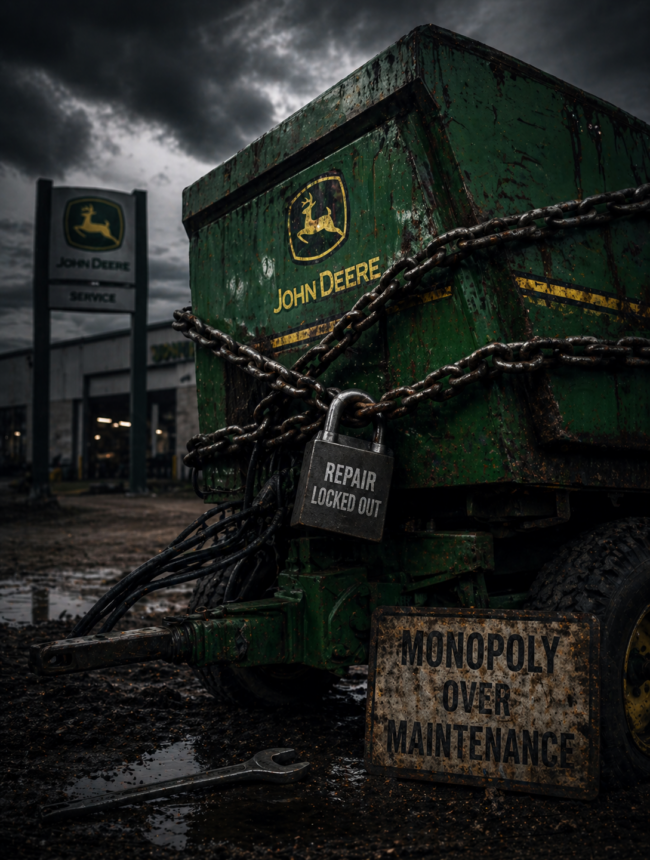
John Deere agreed to a $99 million class action lawsuit settlement over right-to-repair restrictions that locked farmers out of repairing their own equipment. The John Deere settlement covers alleged overcharges from 2018 onward and includes a 10-year commitment to provide repair software to independent shops. Farmers may recover more than half of their overcharge damages.
Imagine watching your $500,000 combine harvester sit broken in your field during harvest season because only a John Deere dealer could run the diagnostic software. That’s like buying a car that no one but the dealer knows how to fix — think about how much your oil change would cost then.
The $99 million John Deere settlement announced this week doesn’t just reimburse farmers for years of inflated repair costs — it breaks open the repair monopoly that made those costs inevitable.
How the Repair Trap Worked (and Why It Was So Profitable)
John Deere didn’t just sell tractors. They built a system where buying the tractor was only the beginning of what you’d pay them.
Here’s the mechanism: Modern farm equipment runs on proprietary software that controls everything from engine diagnostics to hydraulic systems. When something breaks — and $300,000 machines break regularly — the equipment displays an error code. But only John Deere dealers had the software to read those codes and authorize repairs.
The captive market this created:
- Diagnostic monopoly — Only Deere dealers could tell you what was wrong
- Parts monopoly — Only authorized dealers could order certain replacement parts
- Labor monopoly — Independent mechanics couldn’t complete repairs without dealer authorization
- Time monopoly — Farmers waited days or weeks for dealer availability during critical planting and harvest windows
This wasn’t an accident. It was the business model.
The Math That Made Farmers Furious
The settlement covers farmers who paid for repairs from 2018 onward, and the numbers explain why this became a federal case. According to plaintiff attorneys quoted in the settlement announcement, farmers may recover more than half of their previous dealer costs, which means John Deere was charging roughly double what competitive repair would cost.
Predictably, the monopoly pricing looked exactly like you’d expect:
- Diagnostic fees that independent shops couldn’t charge because they lacked access to the software
- Significantly higher labor rates compared to independent mechanics
- Parts markups on components that independent suppliers could provide
- Emergency service premiums during harvest season when farmers had no choice but to pay
The $99 million settlement size indicates widespread overcharges, though the exact number of affected farmers has not been disclosed.
About the John Deere Settlement: What Changes Now — and What Still Doesn’t
The settlement includes a formal 10-year pledge to provide diagnostic and repair software access. This moves beyond previous voluntary commitments to create legally enforceable access.
What farmers gain:
- Independent mechanics can now run diagnostics and authorize repairs
- Farmers can handle basic maintenance without dealer visits
- Competition is expected to drive down repair costs across the board
- Reduced downtime during critical farming periods
What still hasn’t changed: John Deere retains control over software updates, warranty terms, and the underlying equipment design. They’ve opened the repair market without giving up control of the product ecosystem.
The settlement also doesn’t address the fundamental issue: Why should farmers need permission from the manufacturer to fix equipment they own?
The Template for Breaking Other Repair Monopolies
Industry experts suggest the Deere settlement could serve as a template for similar cases. The legal strategy that worked against John Deere — proving that software restrictions create illegal monopolies — applies to any industry where manufacturers control repair access through proprietary diagnostics.
Similar repair restriction cases are pending in automotive, consumer electronics, and medical device industries, where manufacturers use proprietary software to limit independent repair access.
The John Deere precedent establishes that “we own the software” isn’t a defense for blocking competitive repair markets.
The Broader Implications for Repair Rights
This settlement represents more than just compensation for overcharged farmers — it establishes legal precedent that could reshape how manufacturers control repair markets across industries.
The case demonstrates that using proprietary software to create repair monopolies can constitute illegal market manipulation under antitrust law.
Why This Matters Beyond Farming
The repair restriction model that John Deere perfected has spread throughout the economy. From smartphones that require manufacturer authorization for screen replacements to cars that lock independent mechanics out of diagnostic systems, the same basic strategy appears everywhere: sell the product, then control the repair market through software restrictions.
When manufacturers control repair markets, consumers pay more than just inflated repair costs. They lose the option to maintain their equipment longer, upgrade components independently, or choose repair providers based on convenience and price.
This settlement suggests courts are willing to intervene when software restrictions eliminate competitive repair markets.
Legal Precedent Established
The settlement creates a framework for challenging repair monopolies in other industries. Plaintiffs can now point to the John Deere case as evidence that courts will hold manufacturers accountable for using software restrictions to eliminate repair competition.
Implementation Challenges Ahead: Will Anything Actually Change?
While the settlement requires John Deere to provide repair software access, the details of implementation will determine whether this creates real change or just expensive paperwork.
Critical questions for enforcement:
- Will the diagnostic software be provided at reasonable cost or will licensing fees recreate the monopoly?
- How quickly will independent mechanics receive training and certification on the new systems?
- Will John Deere comply with the spirit of the agreement or find new ways to limit repair competition?
- What happens when the 10-year commitment expires?
The John Deere settlement includes provisions for court oversight, but enforcement will depend on farmers and independent mechanics documenting any continued restrictions on repair access. The legal framework exists, but real change requires ongoing vigilance.
Do You Qualify for the John Deere Settlement?
If you’re a farmer affected by John Deere’s repair restrictions:
- Check your eligibility for the settlement — Covers repair costs from 2018 onward. Documentation of dealer charges will be required for claims.
- File your claim when the process opens — Settlement details and claim forms will be available through the court-approved settlement website pending court approval.
- Document current repair restrictions — If other manufacturers are blocking your repair access, file complaints with your state attorney general under “antitrust violations.”
- Support right-to-repair legislation — Contact your representatives about pending federal and state bills that would require manufacturers to provide repair access.
The John Deere settlement shows that major manufacturers won’t hesitate to nickel and dime their loyal customers, if the price is right for their bottom line.
The Bottom Line: Standing Up Matters
The John Deere settlement succeeds only if it encourages similar challenges to repair monopolies in other industries.
If you’re dealing with repair monopolies in other industries:
- Report manufacturer repair restrictions — File with the FTC at reportfraud.ftc.gov under “unfair business practices.”
- Track the John Deere implementation — Monitor whether the company actually provides the promised software access, as enforcement will determine whether this settlement creates real change or just expensive paperwork.
You can take action by documenting restrictions, supporting legislation, and holding manufacturers accountable when they use software to eliminate repair competition.
If John Deere blocked you from repairing your own equipment, report it to the FTC at reportfraud.ftc.gov — or tell us about it.
 Written by: Companies Behaving Badly
The team behind it all.
Been harmed by corporate negligence? Our legal partners can help you understand your rights and pursue justice.